
About
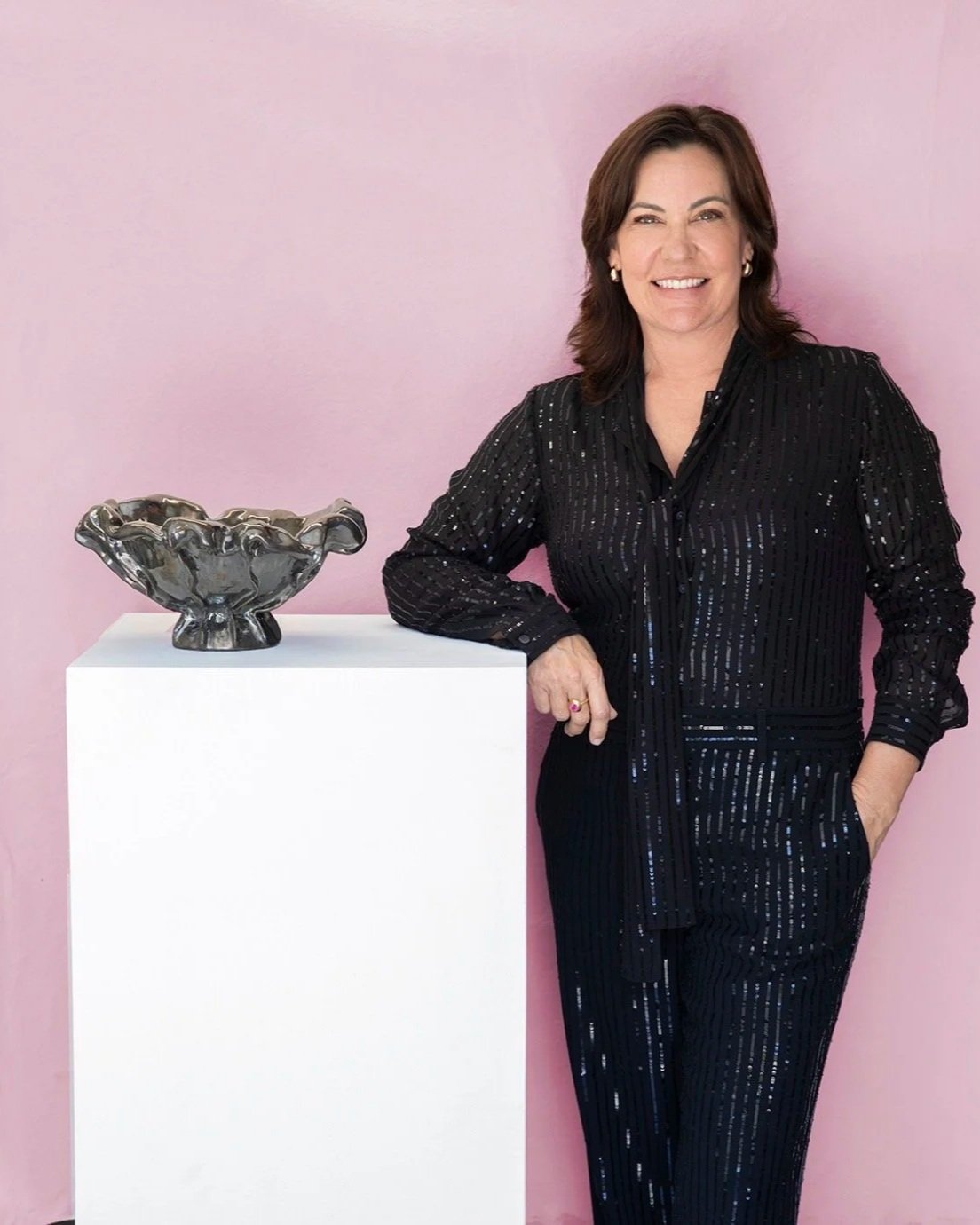
Carrie Cramer is an artist and designer living in Los Angeles, California. Her tactile pieces are formed through her love of texture, flowing shapes, and stretching the limits of materials. She is heavily influenced by the composition of tree trunks, bark, and the way water flows through and around their forms.
Carrie began making art in the mid-’90s while attending the University of Southern California, where she obtained a BAFA with an emphasis in oil painting and sculpture; Ken Price was her ceramic professor. Later, she explored working with metal and large sculptures which set the tone for her smaller, ceramic sculptures.
Along with a background in costume design for television, she has incorporated her love of fabrics, shapes, color, and texture into her pieces. Carrie’s consistent aesthetic shines through her metalwork, ceramic sculptures, and oil paintings, all with very organic and biomorphic shapes that she continues to happily explore and master.
Please contact Carrie to purchase her one-of-a-kind pieces or to inquire about custom projects.
Artist Statement
For twenty-five years, I created costume designs for television, fitting bodies into fabrics, collaborating with color, texture, and form to tell stories through the physical. When I turned to ceramics five years ago, I carried that sensibility with me.
I work exclusively with porcelain paper clay, hand-building vessels that emerge intuitively rather than being meticulously constructed. The forms draw directly from the flow of fabric, the contours of the human body, and the subtle forces of the natural world-erosion, organic growth, the patient carving of water through stone.
Each piece balances structure with softness and intention with surrender, resulting in objects that feel alive and inclusive.This work explores transformation, resilience, and the remarkable ability an object holds to capture a moment in time with utility, function, and beauty.
These are objects that reveal that which often remains hidden: the creative process, memory, and our shared connection to nature and one another. They invite viewers to experience organic vitality, time momentarily arrested, and the irreplaceable presence of something singular.
These aren't objects made in multiples or duplicates.
They're moments, made once, in clay.